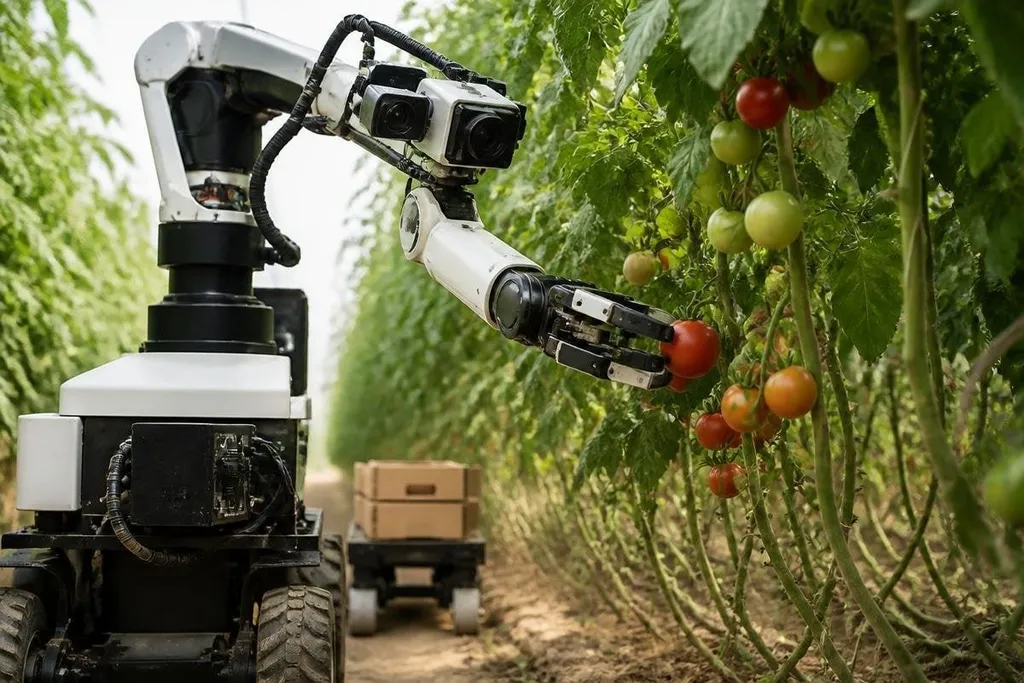
A harvesting robot has to find ripe produce, reach it without damage, and keep working as crops move in wind and light. The advances worth watching are the ones that turn those tasks into repeatable work, not polished demonstrations.
- Better fruit detection in changing light
- Gentler grippers for soft produce
- Longer work periods between stops
Seeing ripe produce
The first hard problem is deciding what to pick. Cameras and software must tell ripe fruit from leaves, stems, shadows, and fruit that should stay on the plant.
That decision gets harder outdoors. Sunlight changes through the day, leaves can block the target, and rain can leave water on the camera lens. A useful system will show how often it picks the right item and how often it misses one.
The test should happen across several rows, not in a cleared display area. Reports should state the crop, the growing system, the lighting, and the share of fruit the robot found. Without those details, a claim about better vision tells you little.
Picking without damage
Finding fruit is only half the job. The arm must reach through branches, hold the produce with enough force to move it, and release it without bruising the skin or breaking the stem.
Grippers made for industrial parts often apply more force than soft produce can take. Harvesting robots need contact sensors, compliant fingers, or another method that lets the hand give way when it meets a branch.
The useful measure is saleable produce after picking. A robot that removes fruit quickly but leaves cuts or bruises may raise work on the packing line.
Any serious report should connect picking speed with damage rates and the number of fruit left behind.
Moving through the crop
A robot also has to reach each plant while avoiding posts, irrigation lines, workers, and uneven ground. Its navigation system must keep track of where it is when rows look alike and the view changes.
That makes the base design as important as the arm. A machine that handles a flat research plot may struggle on wet soil or at the end of a narrow row. Watch for tests that name the surface, slope, row spacing, and weather instead of using the broad label “farm ready.”
A strawberry picker may face soft fruit and hidden stems. An apple system deals with height and branch spacing, so the useful question is how long either machine keeps picking under those conditions. Harvesting robotics coverage can tie that answer to a dated field test and its measured picking rate.
The work period matters
Picking robots spend time on more than picking. They stop to find the next plant, avoid people, clear a blocked arm, empty a collection bin, or recharge a battery.
A useful report will separate motion time from picking time and list every stop that needs a person. That tells you how much work the robot can complete during a shift and where a farm may need extra staff or spare machines.
Battery size alone doesn't answer that question. The practical figure is usable picking time between charges, including slow movement and stops. A robot that works well for a short test may still need a different power plan for a long row.
What to check before believing a claim
The same checks apply to any new harvesting robot. Ask for these details before treating a demonstration as a working farm system:
- Crop and setting: Which crop, row design, soil, and weather did the test use?
- Picking result: How many targets did the robot find, remove, and leave behind?
- Product quality: How much produce remained saleable after handling?
- Human help: Which tasks needed a person, and how often did they occur?
- Work period: How long did the robot pick before charging, emptying, or repair?
- Cost basis: Does the report include the robot, gripper, support staff, and service?
These details also make comparisons fair. A robot built for greenhouse tomatoes may have little to say about outdoor apples, where reach, ground contact, and weather place different demands on the arm.
I’d wait for repeated tests across full crop rows before calling any harvesting system ready for routine use. The next useful milestone is a report that gives picking rate, damage rate, human stops, and work time from the same site, because those four figures show whether the robot can earn its place on a farm.